What I Learned at the Reformed Churches of New Zealand (RCNZ)
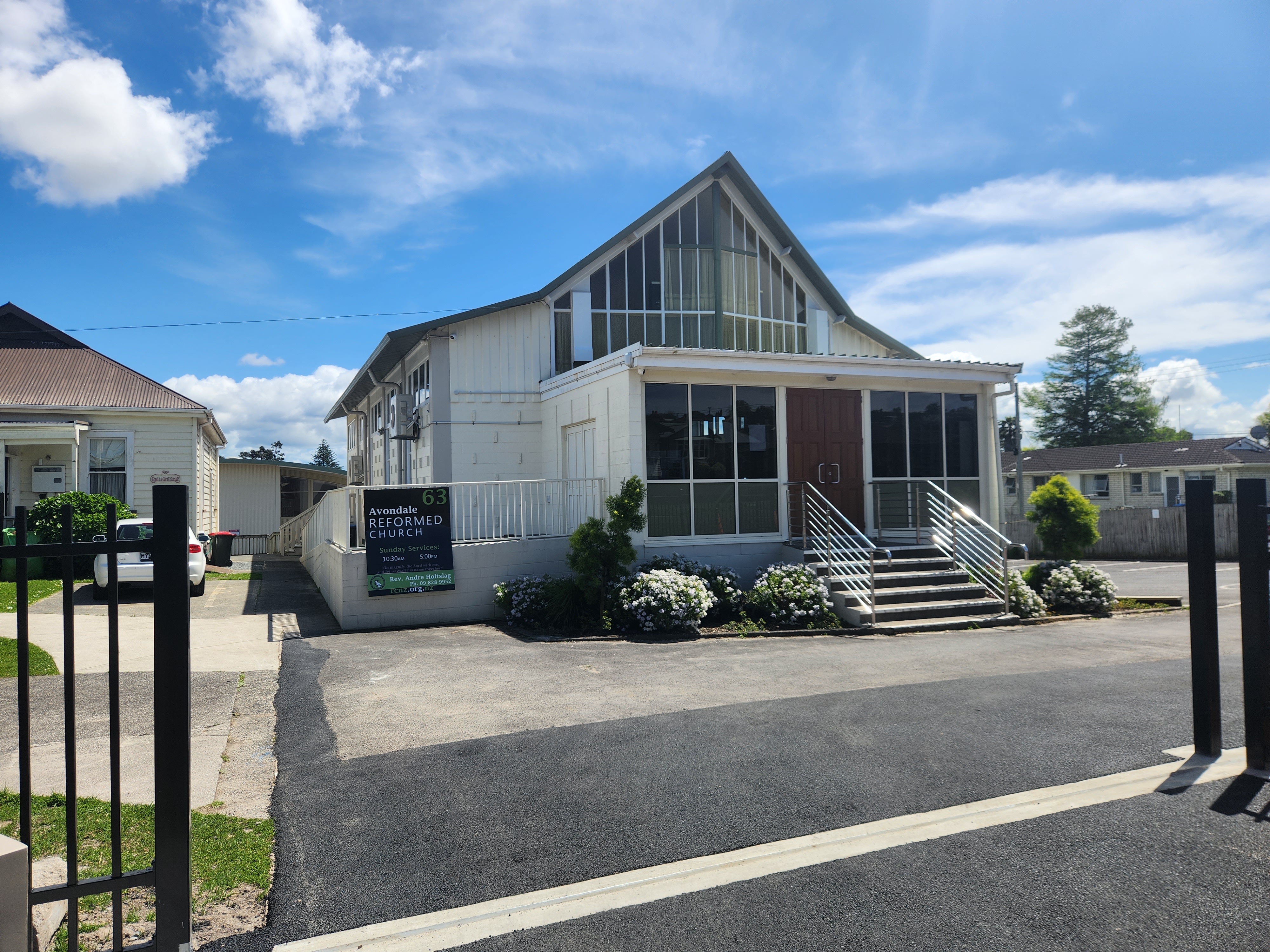
From March to June this year, my family and I had the privilege of spending an unforgettable season in New Zealand. It left us with so many fond memories—stunning landscapes, wonderful child-friendly facilities, and the peaceful serenity that comes with a smaller population. Yet, what we cherish most as a true treasure from this trip was the time we spent within the Reformed Churches of New Zealand (RCNZ).
When we first arrived in New Zealand for our break, we did not have any particular expectations regarding local churches. We happened to find an affordable Airbnb in Avondale, Auckland, as well as a Christian preschool for our child—which turned out to be located right on the grounds of Avondale Reformed Church. Through this providence, we spent two months attending worship there. Later, when we relocated to the Wellington region, we spent another month and a half at Silverstream Reformed Church. Thus, over the course of more than three months, our family experienced life in two sister congregations within the RCNZ, an experience from which we benefited immensely. Below, I would like to share what we learned and gained during this time.
1. Biblical Church Practice
The moment I arrived, I was amazed to find that every aspect of the church’s operations earnestly sought to conform to biblical teaching. Whether in Lord’s Day worship, family devotions, church governance, or daily Christian living, the evidence was clear: whenever issues arose, the common question asked was, "What does Scripture say?" Every rule and discipline of the church was backed by corresponding biblical exposition. Witnessing this, we couldn’t help but exclaim, "This is what a church ought to look like!"
Back home, particularly in our previous church environments, people rarely paid attention to how Scripture applies to practical situations. In fact, a minister at my former church in Beijing used to warn us against strictly following biblical instructions, reasoning that doing so "would prevent the church from growing its numbers." In the RCNZ, however, such biblical practice has not deterred people from coming. On the contrary, more and more believers from non-Reformed backgrounds have chosen to join precisely because of its uncompromising, biblical stance. Everything I mention hereafter is built upon this firm commitment to living out Scripture.
2. Rigorous Preaching and Pastoral Ministry
How does the RCNZ demonstrate its high view of the Lord's Day pulpit? First and foremost, through the qualifications required of its ministers. In the RCNZ, a minister is called by the covenant community, trained at a Reformed theological seminary, and must then serve a lengthy vicarage (internship), followed by intermediate and final examinations. Candidates are interviewed jointly by elders across the presbytery, under standards more rigorous than any I have seen in other churches. Only after undergoing such equipping and testing is one officially ordained as a Pastor.
Such a strict path to pastoral ministry inevitably leads to a shortage of ministers, and the RCNZ is no exception—a few congregations currently remain without a pastor. In these churches, elders step in to handle the preaching. Yet, most elders do not simply improvise their own sermons; instead, they read approved sermon scripts written by ordained Reformed ministers during Sunday worship. Far from being lazy, this practice reflects a profound reverence for the pulpit—safeguarding its sanctity while ensuring that the congregation is nourished by sound doctrine.
An RCNZ pastor typically prepares two sermons each week for the morning and afternoon services on the Lord's Day (perhaps taking one Sunday off per month when a visiting minister is invited). To support this, the elders work alongside the pastor to manage administrative and care duties, ensuring he has ample time to prepare his preaching. This guarantees that the minister can pour his primary energy into the most vital ministry. This is a practice from which the Chinese church—especially its elders—has much to learn.
3. High Regard for Creeds and Confessions
Although I had learned about the importance of creeds and confessions during my seminary studies, churches in China that emphasize their teaching are exceptionally rare. None of the churches I previously attended ever preached through them. In the RCNZ, however, creeds and confessions are an indispensable part of daily church life—be it in Sunday worship, youth groups, or family devotions.
The RCNZ holds to the "Three Forms of Unity" (the Belgic Confession, the Heidelberg Catechism, and the Canons of Dort), alongside the Westminster Standards (Confession of Faith and Catechisms). Typically, the afternoon service on the Lord's Day centers on exposition from these confessions. Midweek small groups—for both youth and adults—also study them, and many members lead their children through these summaries of faith at home. It was through this opportunity that we formally and earnestly read through these precious creeds and confessions.
While creeds and confessions are not Scripture and are not in themselves infallible, placing oneself under their wisdom and submitting to the historic witness of the saints across generations brings immense honor and spiritual safety. It has inspired me to lead my own children in learning these creeds and confessions from a young age.
4. The Beauty of Covenant Theology
Prior to coming to the RCNZ, I had heard of Reformed Covenant Theology, but had never studied it deeply. Taking advantage of our time here, I dedicated time to examining paedobaptism (infant baptism) and covenant theology. While infant baptism itself is an outward sacrament, its theological core is Covenant Theology. I often heard Reformed believers refer to this as "the beautiful Covenant Theology." At first, I didn't fully grasp what they meant, but after careful study, we realized just how beautiful it truly is!
Although I have not yet fully embraced infant baptism myself, the grand picture it paints left me in awe. Children of believers enter into the covenant community from infancy through baptism, and this covenant community upholds every believer and their family. Everyone's calling—including the calling and equipping of ministers—originates from within the covenant community. It represents the people of God parallel to Old Testament Israel, yet under a far better covenant.
5. Daily Family Worship
In the RCNZ, worship takes place twice every Lord's Day, in the morning and afternoon. Although not explicitly commanded as a rigid law in Scripture, this pattern reflects a wonderful rhythm revealed by God. In the Old Testament, His people offered sacrifices every morning and evening (Exodus 29:39). Corresponding to this is the practice of family worship.
When we visited the homes of RCNZ brothers and sisters, families would regularly gather around the Bible and devotional guides. Parents and children sat together, reading aloud and sharing reflections. Many families also read Scripture together at every mealtime. Inspired by their example, upon returning home, we established daily worship morning and evening. In the morning, we read Bible stories with our child, and in the evening, we use devotional materials together. We are deeply grateful to the RCNZ for helping us build this habit of family worship!
6. Male Leadership in the Church
Another distinct feature of RCNZ churches is that the offices of elder and deacon are held exclusively by qualified men, flowing from the biblical understanding of male headship and preaching. For someone like me, who has been in the Chinese church for over two decades, this felt somewhat unfamiliar at first. While people may hold differing views on this matter, one cannot help but observe the RCNZ's steadfast faithfulness to Scripture.
Women are by no means marginalized; they serve dynamically in children’s education, literature work, mission support, and practical care, feeling fully valued and respected. Furthermore, I saw many men encouraged and built up through this structure. Particularly for brothers who entered the Reformed church from other denominations or newly came to faith, watching their lives gradually transformed to the point of serving as deacons and leaders was a joy to behold.
7. A True Day of Rest
This was something I only realized after staying for over a month: in its church life, the RCNZ approaches the Lord's Day with a Sabbath mindset. On Sundays, members refrain from shopping or dining out at restaurants; instead, they devote the day entirely to worship, enjoying family time, and hosting fellow believers.
Living this way in a major city like Auckland is no easy feat—especially given that the Sunday flea market in Avondale sits right next door, offering tempting prices every Sunday. (Although I noticed that many Chinese believers still persistently shopped there on Sundays), many dedicated brothers and sisters faithfully strove to honor the church's biblical convictions and leadership, setting a wonderful example for us.
Final Thoughts
This was my first time getting to know a Reformed church so intimately. In China, "Reformed" is not always viewed positively, often because immature believers who have not fully digested its doctrines use them to criticize others, leaving a negative impression on the term. But in the RCNZ, as I spent time with many pastors and co-workers, I witnessed their deep humility and unwavering commitment to God's Word. They were willing to discuss infant baptism with me—a non-member—openly hosted our family in their homes, and regularly prayed for China and other nations facing religious persecution.
If it were possible, I would have loved to stay longer. Yet I have an unfinished mission and people to shepherd and serve, inadequate as I feel compared to the elders of the RCNZ. Perhaps New Zealand was my Elim—a place to lay down my weariness, be refreshed, and prepare to continue my journey through the wilderness. May God preserve the RCNZ and its churches, enabling them to hold fast to the faith and bear a glorious witness for our Lord on this earth!

Comments ()