[Repost] Fairly Evaluating House Church Historical Figures: Lessons from the Xu Yongze & "Heavenly Man" Interview Controversies
Pastor Zhang Boli recently interviewed several early Chinese house church leaders, including Xu Yongze and Brother Yun. Following the broadcast, some accusations surfaced online, with people labeling them as "heretics" or even a "cult."
Today, I don't want to join an online flame war, nor am I trying to prove these elders made no mistakes in the past. What concerns me is: when we sit in our spacious, well-lit study rooms today, equipped with complete Bibles, rich theological books, and easily searchable online resources, how should we look back and evaluate those who groped their way forward amid persecution? How should we distinguish between so-called heresy, cults, and extremes?
I believe Pastor Zhang Boli's interviews serve an important purpose: not letting today's believers forget the price paid by the Chinese house church. Commemorating history is not the same as deifying individuals, and pointing out deviations is not the same as casual condemnation. The real question is: by what standard should we evaluate them?
I. Historical Empathy: Seeing Earthen Vessels in Ruin
Evaluating a historical figure completely detached from their era is often both cruel and inaccurate.
Around the Cultural Revolution, the Chinese church faced not ordinary resource scarcity, but the severe destruction of public church life, extreme shortages of Bibles and spiritual literature, and a near-total halt to formal theological education. Many grassroots believers lacked complete Bibles, seminaries, and mature governance models—and even normal fellowship carried immense costs. Yet the revival of the Chinese house church in the late 1970s and early 1980s happened precisely in this environment. Many preachers lacked higher education, expressed themselves less rigorously, and possessed incomplete theological frameworks, yet they preached the gospel, established gatherings, memorized Scripture, and trained co-workers in suffering. Historical materials of the house church also show that revival in this period was tightly intertwined with suffering-prayer, repentance-preaching, intense spiritual thirst, and various signs and wonders.
I myself served in the Chinese church for 14 years and came to faith at 13. Back then, I listened to my grandparents' generation share how they yearned and pursued in those days of suffering, how a single piece of paper with Scripture on it was passed around among everyone. Having planted churches, pastored believers, and trained grassroots co-workers across various regions in China myself, I deeply know that many brothers and sisters—though they never spent a single day in formal theology—had a genuine love for the Lord.
In that era, with those characteristics and environments, God was able to work, using these people so that the fire of the gospel would not go out on the Chinese mainland. They certainly had historical limitations and perhaps teachings needing correction, but we must not forget that God used these imperfect earthen vessels to preserve the gospel fire in the wilderness.
God using a person doesn't mean every word they spoke was correct; a person having cracks doesn't mean God never worked through them. Thus, context cannot change truth, yet it affects whether we can fairly understand a person's limitations. We can certainly critique our predecessors, but we shouldn't use easily accessible modern theological resources to mock those who struggled to own even a single complete Bible back then.
II. Political Labels vs. Theological Boundaries
The rapid growth of the house church back then also touched social management and political control. Some religious groups and preachers were consequently labeled as "illegal organizations," "disrupters of order," or even "cults."
However, Christians must be clear: the "cult" label used by political systems does not necessarily answer the same question as "heresy" in church history. Political judgments typically care about whether an organization is managed and whether activities are approved; theological judgments care about how a person understands God, Christ, Scripture, salvation, and the church.
Public materials describing Xu Yongze already show notable conflicts: some official/state-linked materials directly use political labels like "leader of a cult organization," while other house church historical materials discuss related movements within the complex backdrop of persecution, revival, and doctrinal controversy. Therefore, we cannot directly copy past political categorizations and turn them into today's theological verdicts.
Of course, rejecting political stigmatization does not mean declaring all teachings of the individual correct. The responsible approach is to temporarily set aside political labels, return to the individual's primary source materials, and examine their consistent, systematic, and public teachings.
Theological discernment also requires establishing an important scale: not all errors carry the same severity.
- Denying the Trinity, denying Christ's complete divinity and humanity, denying Christ's accomplished redemption on the cross, or raising up another savior—these errors shake the foundation of the Christian faith.
- However, when certain spiritual experiences, emotional expressions, or service styles are overemphasized—even if they form deviations—we cannot judge someone as a heretic or a cult solely based on a label.
Take the "Crying Sect" (Ku Pai) for example: people under long-term heavy pressure, upon hearing the message of sins forgiven and acceptance by God, showing intense weeping is not hard to understand. Weeping may manifest genuine repentance, but it is not the merit of rebirth, nor the proof of salvation. If someone encourages believers to genuinely confess and deeply repent, we cannot judge them a heretic merely because people weep bitterly in gatherings. However, if someone systematically teaches that people must cry for days and nights to be born again, turning a specific emotional expression into a necessary condition for salvation, then the issue is no longer just a form of gathering; it touches the boundary of the gospel and must be seriously examined.
Public records show that the relationship between intense weeping and rebirth previously generated theological controversy within the Chinese house church, with pastors of different stances offering distinct views. So not all critiques are malicious internet trolling, yet we cannot unverifiedly declare historical controversies as ironclad proof of heresy. Words spoken by X or definitions given by Y do not directly constitute evidence. The decisive basis is not internet-circulated titles or secondhand retellings, but what the individual actually taught consistently and systematically.
III. Dynamic Life: Looking Past Fragments to Wholeness
Judging a preacher cannot rely on cherry-picking a sentence from decades ago, nor just listening to a single sermon today. We need to ask: what did they teach in the past? Have they corrected since? Do they still hold to it today? Do their overall teachings direct people toward Scripture, Christ, and the cross?
The gospel tells us people make mistakes and can repent; human understanding can be crude, yet continually renewed and grown in God's grace. Past errors cannot be easily erased, yet they should not automatically become an unappealable lifetime sentence.
To label someone a heretic, one should produce consistent, verifiable, first-hand systematic teachings from them. To prove they later corrected, evidence is also required. Critics and defenders alike cannot select only fragments beneficial to themselves.
Conclusion: Guard Truth, No Witch-Hunts
Remembering these predecessors today is not to shape anyone into an immaculate spiritual hero. Suffering does not prove every word of a person is right, and service effectiveness cannot replace scriptural testing. Yet possessing rich theological resources does not mean we can stand on a historical high ground and look down with contempt on those groping in ruins. We cannot stop discerning because they suffered, nor can we erase all the work God once did through them because they had limitations.
On one hand turning suffering into unquestionable spiritual authority, on the other hand turning orthodoxy into an arrogant sense of superiority in judging others—both can cause Christ to lose the center.
Mature Christians and mature churches do not rely on manufacturing idols for a sense of security, nor do they rely on witch-hunts to prove their purity. We guard truth to build up the church, protect the flock, and restore limbs—not to prove ourselves more awake than others.
So before slapping a heresy or cult label on any predecessor, perhaps we should all ask ourselves first:
- Do I genuinely have enough first-hand evidence in hand?
- Is my judgment helping the church know Christ, or is it merely adding fuel to the next online flame war?
May the Lord have mercy on us and bless His church.
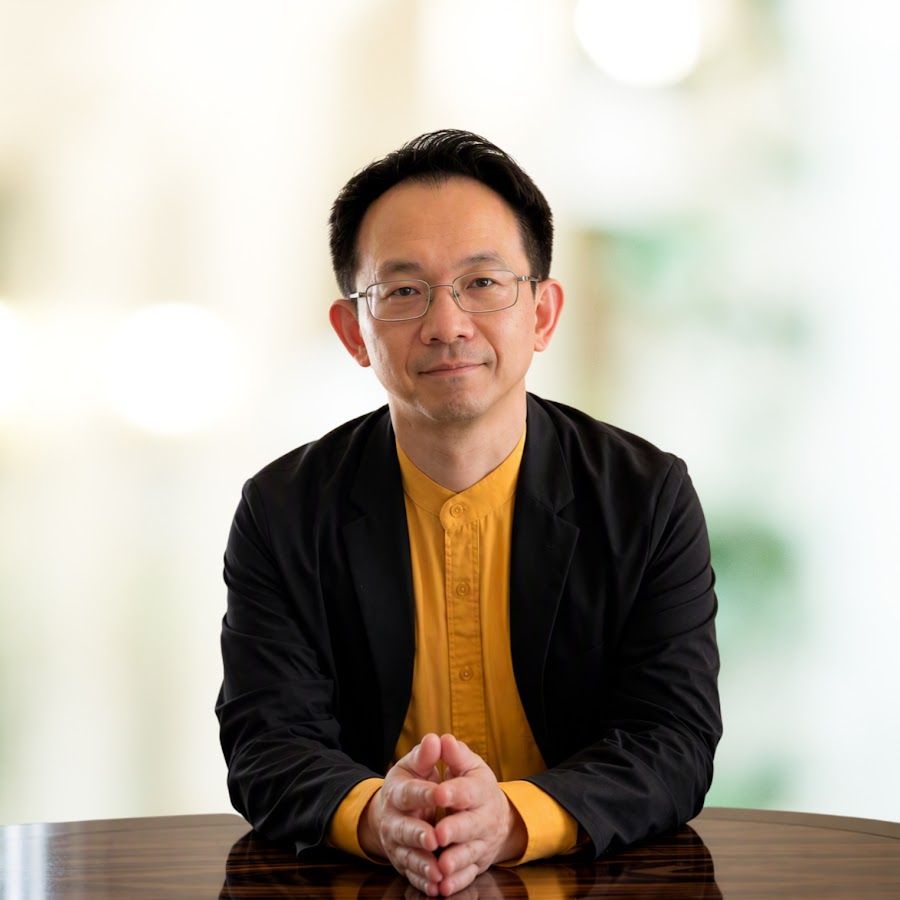
Reposted from Pastor Xie En's YouTube channel (South Jersey Chinese Christian Grace Church).


Comments ()